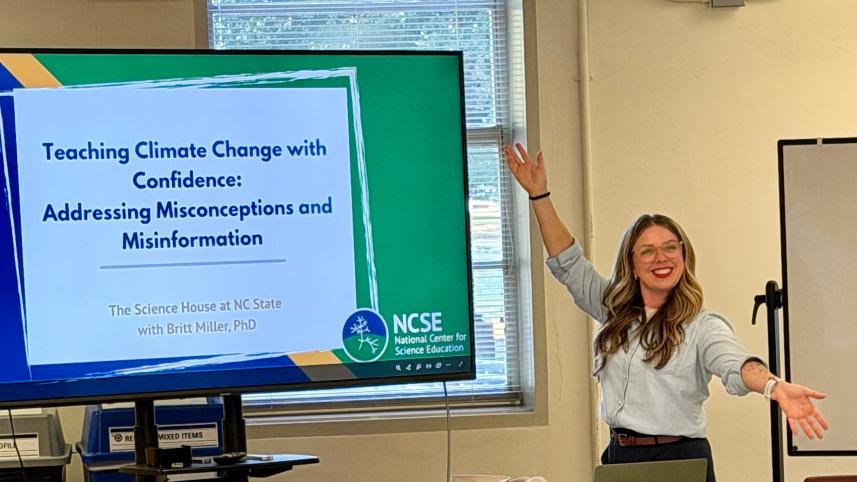
So during our workshop, before diving into how to teach climate change directly, we started thinking about our students and the differing experiences and backgrounds they bring with them into learning. As Katherine Hayhoe writes, we dove into how “facts, feelings, and identity” are shaping students' understanding and interaction with climate science. The teachers particularly connected with resources from the Climate Mental Health Network, including the Climate Emotions Wheel and strategies for building emotional resilience. Research suggests that simply recognizing and labeling a negative emotion, such as anxiety or fear, is an important first step to building emotional resilience and helping students move towards feeling more agentic (Dooley, 2025). We also unpacked ways to create a space in the classroom for students to share their ideas and feelings, through our BRAVE classroom practices. These resources set the stage for diving more firmly into teaching climate change.
NCSE has a number of climate change resources, but our story short “Climate Change in Your Backyard” was a great fit for this group. The first lesson begins by asking students to analyze more than 20 years of data from NOAA’s National Centers for Environmental Information (NCEI) and look for patterns in billion-dollar weather and climate disasters. One pattern quickly stands out: these costly events have increased over time.
But noticing this pattern is only the beginning. Next, students investigate what is driving that increase and discover that, while there is no single cause, climate change is increasing the frequency and intensity of many types of extreme weather. For the North Carolina teachers, the connection to Hurricane Helene was immediate. They could see how the lesson could help students move from their own experiences with extreme weather to asking questions and investigating the science behind those experiences.
The Story Short continues with a dice-rolling simulation, modeling how global warming can change the likelihood of extreme weather. Just as loading a die makes certain rolls more likely, adding energy to Earth’s atmosphere and oceans can make some extreme weather events more frequent or intense. Students then build on this idea by exploring climate attribution (how scientists determine whether, and to what degree, climate change made a particular event more likely or intense) before examining climate impacts and adaptation strategies in their own state. As we worked through the story short, the connections to Helene were hard to miss. Teachers could see how a resource like this could give students a way to investigate the science behind an event they had experienced, while still making room for the questions and emotions that experience might bring up.
Spending the day with these passionate educators reminded me why the work we do at NCSE matters. These teachers care deeply about their students and want to help them make sense of climate change in ways that are scientifically accurate, relevant, and meaningful. Providing free, classroom-ready resources is part of that work, but so is giving teachers the time and support they need to confidently use them. With the right support, teachers can help students move from experiencing a changing climate to understanding it and, ultimately, feeling more prepared to take action.