Disappointing, and Mysterious, Revisions to Iowa’s State Science Standards
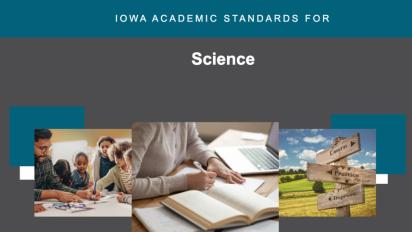
It was a mixed blessing when the Iowa state board of education voted to adopt a revised set of state science standards on May 8, 2025. Language about evolution and climate change had been censored — under circumstances that remain murky — from a previous draft of the standards. While a substantial amount of the censored passages were restored, the standards adopted by the board were still not as adequate on evolution and climate change as they could have been.
Iowa adopted the Next Generation Science Standards in 2015, having collaborated on their development as a Lead State Partner. The state board of education voted unanimously to adopt the NGSS, and the decision appears to have been generally uncontroversial. Although there was a string of bills from two state legislators, Sandy Salmon in the Senate and Skyler Wheeler in the House of Representatives, attempting to prevent or undo the adoption, none of these ever passed committee.
In 2024, the state department of education announced that the state science standards would undergo a scheduled review and revision. There were no signs of anything unusual in the process — until the department issued a draft revision of the standards. Birgitta Meade, a science educator and a long-time member of NCSE, promptly alerted the NCSE office, “Biological evolution is scrubbed from the standards as is climate change,” adding that she “could really use some help with ... this foolishness.”
Indeed, “evolution” was scrubbed, although not completely, from the standards: for example, “Biological Evolution” became “Biological Change Over Time,” “evolutionary relationships” became “relationships,” and “simultaneous coevolution” became “simultaneous change.” A reference to the 4.6-billion-year age of the earth was removed. Similarly, “climate change” became “climate trends,” while references to impacts of human activity on the environment became references to impacts on the environment.
I told KCRG News in Cedar Rapids that the adoption of the revised standards would not prevent teachers from discussing evolution and climate change, “[b]ut it would make it harder for teachers who don’t feel comfortable because they haven’t had sufficient preparation for doing so or because they fear community backlash.” I added, “These changes send a misleading signal, a downright false signal that there’s something wrong with talking about evolution and climate change in science classrooms.”
How could the review and revision committee, which consisted of 37 Iowa educators and scientists, have thought that it was a good idea to compromise the scientific integrity of the state science standards? It turns out that it didn’t. Referring to the com- mittee charged with reviewing and revising the standards, KCRG News reported that it “obtained a copy of the documents that committee sent to the department of education, and it doesn’t match the documents released … to the public.”
At subsequent public forums around the state, individual members of the review and revision committee explained that the problematic revisions were not present in the document prepared by the committee and that there was no indication that any substantive changes would be made. One member complained that she had been personally castigated for undermining the treatment of evolution and climate change. Meanwhile, the department refused to answer questions about the source of the revisions.
I watched two of the public forums in their entirety from afar; it was gratifying to see so many Iowans — including NCSE members Paul Bartelt and Birgitta Meade — express their concern about the quality of science education in the Hawkeye State and their anger about the tampering with the standards. Unexpected but welcome was the citation of an NCSE news story by a woman who identified herself as a local school board member.
At the end of the day, then, the treatment of evolution and climate change in Iowa’s state science standards was unnecessarily damaged, and nobody is willing to claim responsibility or defend the revisions.
Subsequently, writing on Bleeding Heartland, I urged Iowa to retain “the scientifically accurate and pedagogically appropriate language about evolution and climate change” in its current state science standards. Similarly, the Des Moines Register commended the Iowans who protested the problematic changes, commenting, “It’s alarming that somebody with influence thought that muddying these waters was worth considering.”
Particularly noteworthy was Waad Defalla’s column in West Side Story, the student newspaper at Iowa City West High School, which quoted a teacher as worrying, “I think a lot of science teachers are wondering, ‘Is this the first step towards a ban of topics within Iowa science classrooms?’” Defalla concluded her column by affirming, “Climate change and evolution are scientific concepts and should not be weaponized as political hot-button issues.”
The proposed standards were revised again, by a brand-new committee, and when they received their first reading before the state board of education on April 17, 2025, language about evolution and climate change that was censored from a previous draft was partly — but not completely — restored. The Cedar Rapids Gazette reported, “Despite updated language in the second version of the revised standards, some concerns remained among members of the public.”
“Biological Evolution” and “simultaneous coevolution” were restored, but “evolutionary relationships” and the reference to the 4.6-billion-year age of the earth were not. The reference to “climate change” was revised to “climate changes and trends,” but “the rise in global temperatures over the past century” was still the vaguer “the change in global temperatures in time” and the phrase “due to human activity,” removed from a discussion of relationships among Earth systems, was still absent.
After the board’s vote to adopt standards, KCRG News summarized, “Teachers across the state will soon have more vague teaching standards for topics like climate change and evolution.” I explained that the new standards obscure human responsibility for climate change, adding, “If Iowa students don’t come to understand this today, they won’t be in position to take suitable action tomorrow.” KCRG News also observed that the changes to the standards still have not been explained.
At the end of the day, then, the treatment of evolution and climate change in Iowa’s state science standards was unnecessarily damaged, and nobody is willing to claim responsibility or defend the revisions. “These changes detract from the scientific integrity of the standards,” NCSE Executive Director Amanda Townley commented. “Fortunately, Iowa’s science teachers still have the power to continue teaching about climate change and evolution forthrightly.”