Impact Reports

NCSE's recent impacts in science classrooms, at statehouses, and in the media.

2025
Year in Review

In 2025, we created a podcast, forged new partnerships, fought attempted ideological interference in the classroom, and supported science teachers in myriad ways. 

Impact Highlights

Science Education Outreach

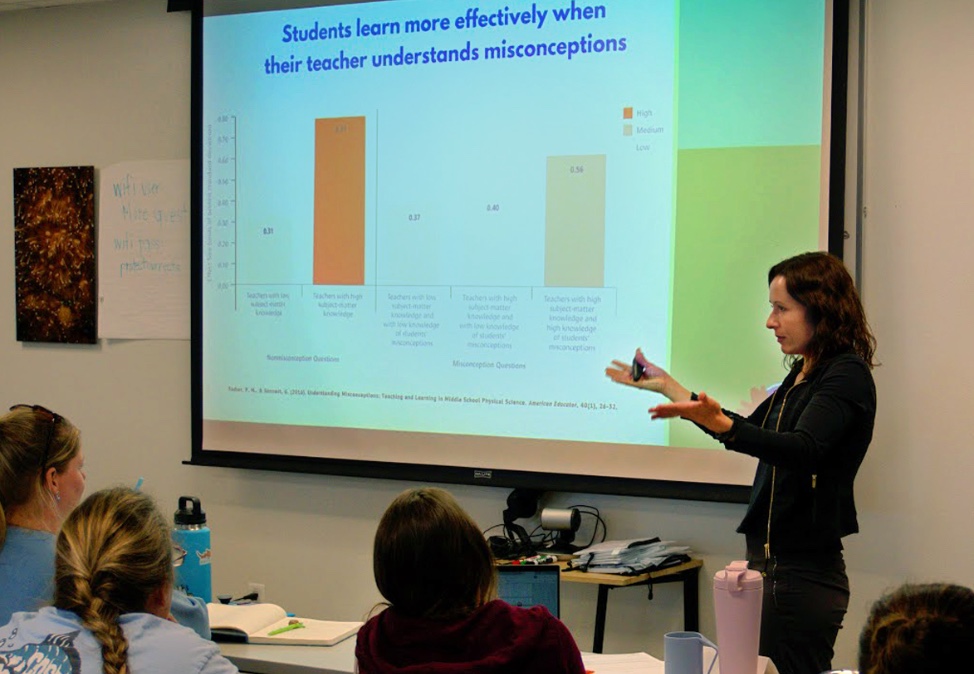
  •  Engaged teachers with our unique approach to effectively teach accurate science, reaching 1,524 educators through 39 workshops, conferences, and webinars. 
  • Provided our newly revised free climate change, evolution, and nature of science classroom lessons developed by teachers and science education experts to teachers nationwide. On the NCSE website, the lesson sets were downloaded 1,830 times by 1,435 educators.
  • Led NCSE’s unique My COAST (Climate-Oriented Authentic Science Teaching)  multi-day hands-on learning event for 28 science teachers in Key West, Florida.
  • Supported science education research and developed best practices for science teachers through the work of NCSE’s Sound Science Fellowship initiative. 
  • Commemorated the centennial of the Scopes “monkey” trial by holding a two-day symposium (in collaboration with Vanderbilt University), presented a webinar series with experts, and offered a popular online Scopes “monkey” trial quiz for NCSE supporters. 

Catalyzing Action

Investigating Science Education

  • Wrote a chapter on polling attitudes toward evolution for a book on religious belief and science. 
  • Contributed a chapter on the treatment of climate change in state science standards to a book about climate education in New Jersey.

Informing the Public

  • Launched NCSE’s Safeguarding Sound Science podcast, featuring scientists, teachers, and experts who challenge common misconceptions about science while also providing a window into the frontiers of science education, climate science, and evolution. The 17 episodes were downloaded 15,933 times.  
  • Continued to be the “go to” source for journalists covering the state of science education. We provided background information and quotes in podcast interviews and in articles in local and national newspapers and magazines. We also authored essays and op-eds in magazines such as Education Week and Scientific American.