New Evolution Story Shorts Take a Human Approach
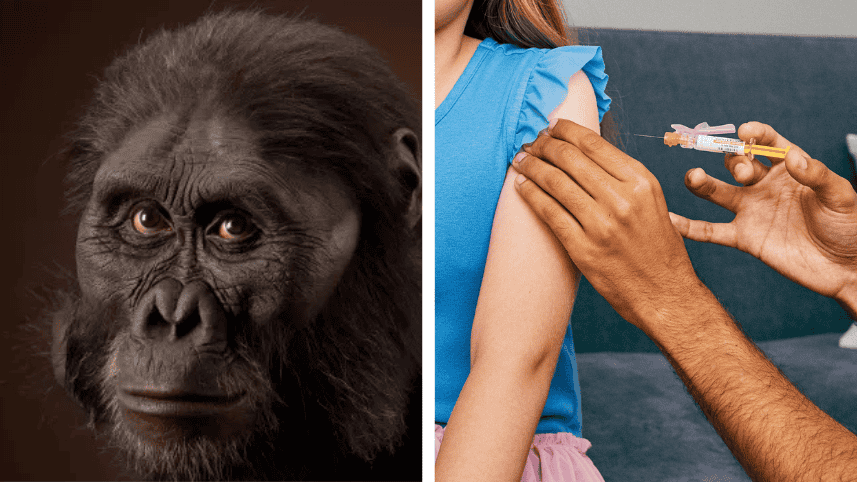
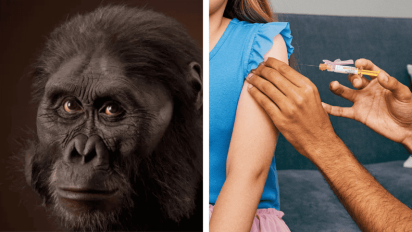
Left, Australopithecus afarensis, Smithsonian Institution. Right, young girl about to receive a vaccine in her upper arm. SELF magazine. CC BY 2.0.
During the centennial year of the Scopes trial, NCSE has published two new Evolution Story Shorts focused on humans. Take that, Butler Act! Addressing common misconceptions while also engaging students in a topic they all want to know more about (themselves), these new Story Shorts seek to provide teachers with easy to use activities to make learning about evolution interesting and relevant.
The Human Story engages students in the driving question: What can different types of scientific evidence tell us about human evolution? Throughout this Story Short, students will grapple with the question “What does it mean to be human?” as they analyze various types of data from hominins. This activity blends the process of science with older discoveries and new technologies so that students can compare and contrast hominin anatomy by analyzing fossils, make inferences about hominin behavior and culture, and dig into our genetic ancestry. With recommended Side Quests, teachers can also make this lesson their own and follow their students’ curiosity to dig deeper into the evolution of things like bipedality, lactose tolerance, and skin color if time allows. Students should come away with an understanding that, although hominin evolution can be a complex tangle of various species, multiple lines of physical, anatomical, geographic, and genetic evidence can help us better understand a clearer picture of our ancestry and origins.
The Pathogens and Vaccines Story Short pivots from humanity’s past to a more current issue affecting humans by posing the question, “Why do we need a new flu vaccine every year but not a new measles vaccine every year?” Students will begin by learning about how vaccines protect us from pathogens and will be introduced to the recommended vaccine schedule from the US Centers for Disease Control and Prevention. They will then use data to compare and contrast bacterial and viral infections before using a simulation to model microbial evolution. Finally, students will bring what they have learned together to explain why the influenza virus evolves more rapidly than the measles virus.